BITTERSWEET GOODBYE

A NY LEGEND LOST
EX-KNICKS, NETS GREAT MICHAEL RAY RICHARDSON WAS A SHINING, TORTURED SOUL / VACCARO:
Knicks, Nets great Richardson lived rich life in NBA many were afraid would end sooner
12 Nov 2025 - New York Post
Mike Vaccaro - mvaccaro@nypost.com
LET’S START with the words of a man named Earvin Johnson, known to the world as “Magic,” who, when he speaks about the position of point guard, talks with the authority of J. Robert Oppenheimer on the splitting of the atom.
This was Magic, to me, in May 2020: “When I was playing, the one player I enjoyed watching more than anyone else was Sugar Ray Richardson. When I saw him, I saw a smaller version of me. I had four inches on him. But he did everything else just as well as I did.”
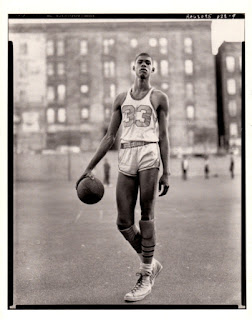
Let that serve as the greatest possible epitaph for Michael Ray Richardson, who died Tuesday at 70 after a battle with prostate cancer, who was an All-Star for both the Knicks and the Nets and was ticketed for Springfield, Mass., and the Hall of Fame before his NBA career was derailed by cocaine.
For Knicks fans of a certain generation, he was one of the few sources of light (along with Bernard King) in the long slog of years bridging Willis Reed and Patrick Ewing (and ironically it was Richardson whom the Knicks swapped in exchange for King in December 1982). For Nets fans of a certain generation, he was the lone neon sign of prosperity in the dark years spanning Julius Erving and Jason Kidd.
He was legit, too. As a Knick he led the league in steals twice and assists once, and he made the All-Star team three straight years, 1980-82. As a Net he was the NBA’s comeback player of the year in 1985, and that came a year after the ’84 playoffs in which Sugar’s virtuoso brilliance led to a five-game first-round upset of the defending-champion 76ers, the high-water mark for the Nets in their 25-year NBA existence prior to 2002.
“He was a fearless player,” Magic said of Sugar.
He was just as fearless when surrounded by notebooks and cameras. At his very first news conference as a rookie, he was asked about the nickname: “It’s because I’m so sweet on the court.” But that was just a warmup for Christmas Day 1981.
That afternoon at Madison Square Garden, the Knicks lost to the Nets 96-95, and it was clear this was going to be Red Holzman’s last dance because the team was already slipping sideways. Afterward, Nat Gottlieb, a writer for the Newark StarLedger, asked Sugar: “What do you think of the team’s chances?”
“The ship be sinkin’,” answered Sugar, one of the most oft-repeated sports quotes ever.
Harvey Araton, covering the team for The Post, followed: “How low can it go?”
And Sugar, smiling, said: “The sky’s the limit!”
“He was an engaging guy,” Araton says today. “And he had hands like iron grips, which is why he was such an incredible defender.”
He also had his demons. Four times he entered rehab seeking to fight his growing cocaine addiction. Four times it didn’t take. Finally, on Feb. 20, 1986, he was ordered to submit to a drug test following a domestic dispute (the charges of which were quickly dropped), understanding that he was one failed urine sample away from a permanent NBA ban.
Five days later, that’s what happened. He’d just signed a fouryear, $3 million contract, most of which he’d have to forfeit. His 16point, nine-assist, four-rebound night in a 99-88 loss at Washington on Feb. 24, 1986 would be his last NBA game. He was six weeks shy of his 31st birthday. Commissioner David Stern made the announcement.
The day after he was suspended, an anonymous Knick who’d known Sugar his whole NBA career told The Post’s Michael Kay: “I hate to say it, but Sugar is going to wind up dead. The next story we read about him is how he’s been killed. He’s heading for death.”
That seemed a general consensus.
But now we fast-forward more than 11 years. We are inside the Palais Omnisports in Paris on Oct. 18, 1997. The NBA champion Bulls are playing the Greek team Olympiacos Piraeus, the Euro champs, in the McDonald’s Open. Stern is sitting courtside alongside his wife, Dianne, watching pregame warmups.
Someone taps him on the shoulder.
And before Stern can even stand up, Sugar Ray Richardson says, “I want to thank you for saving my life. If it hadn’t been for you I would have kept using. Because of what you did, I stopped.” Richardson extended his hand.
Stern hugged him instead. They embraced for some time.
Sugar had indeed finally gotten clean, resumed his show-stopping basketball career all across Europe and was even then, at 42, playing for Cholet Basket in the French premier league. Later, with Stern’s occasional help, he’d coach in Albany, Oklahoma, Canada and London.
Richardson would still occasionally find trouble, getting fired in Albany for making an antisemitic remark for which he quickly apologized and for which Stern and ex-Nets owner Joe Taub, among many others in the Jewish basketball community, forgave him.
“But that was Sugar,” Araton says. “A mass of chaos and contradiction.”
(And that includes his “real” name. Born “Michael,” he announced in 1983 that he wished to be referred to as “Micheal.” Sometime between then and 2024, when his autobiography “Banned” was published, he switched back. His family Tuesday wished that he be referred to as “Michael.”)
His final years were spent happily, often watching his son, Amir, play soccer for Italian Serie A Club Fiorentina and the Moroccan national team. And to the end the light burned bright in his eye. A few years ago, Araton called his old friend.
“How are you doing?” the writer asked.
“I’ll tell you what,” Sugar said. “I’m not sinkin’.”


Commenti
Posta un commento